
An arrest can be an overwhelming and confusing experience, especially when it involves the loss of personal belongings. Beyond the immediate concerns about navigating the criminal justice process, you may also wonder what happens to your wallet, phone, vehicle, or other property taken by law enforcement. Understanding the rules surrounding seized property is crucial, particularly for individuals and families in California. This guide outlines the key points about property issues after an arrest, explains why items may be held, and offers practical advice to help you better understand your next steps.
What Happens to Personal Belongings During an Arrest?
When a person is arrested, law enforcement often collects and handles their personal belongings as part of the arrest procedure. Common items confiscated include wallets, keys, phones, bags, and personal identification documents. These items are typically logged into an inventory system and stored securely by the arresting agency.
The handling of personal property depends on its purpose. For example:
- Personal items like cash and keys may be held only temporarily for safekeeping.
- Electronic devices like phones and laptops may be seized for potential evidence.
- Vehicles may be impounded, especially if they’re involved in the alleged crime or parked in a way that disrupts traffic.
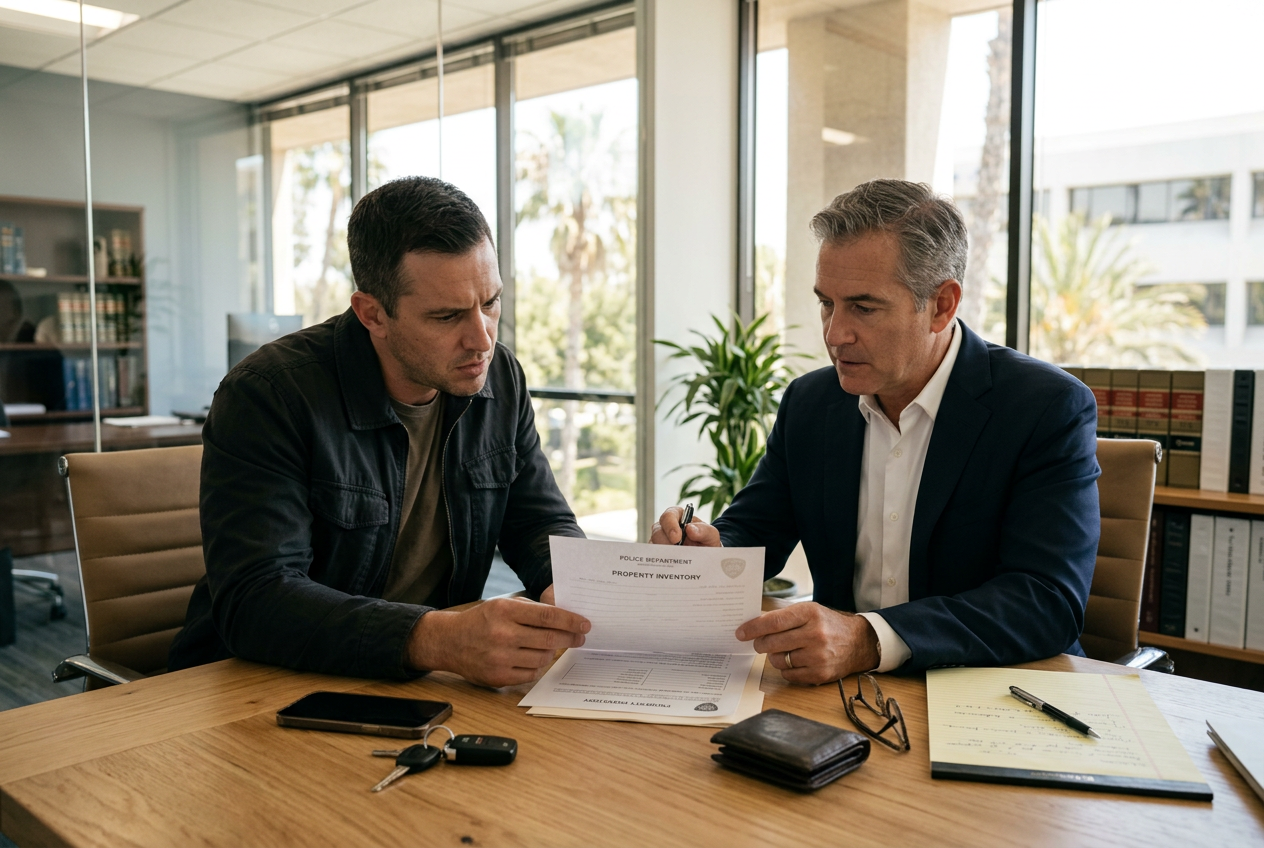
Officers will often provide an itemized receipt for the property they take. It’s important to keep this receipt, as it can help when trying to recover items later.
Why Might Police Keep Your Property?
There are several reasons why law enforcement may hold onto property after an arrest:
1. Property Held for Safekeeping
Sometimes, belongings are taken simply to ensure their security during your detention or until your case concludes. For example, cash, jewelry, or your vehicle might be set aside for you to retrieve after release.
2. Property Retained as Evidence
If your belongings are connected to the investigation — such as a phone containing incriminating messages or a vehicle linked to an alleged crime — the police may keep them as evidence. Evidence retention allows authorities to preserve and analyze the items for use in legal proceedings. Unfortunately, this can delay their return, as they’ll only be released once they’re no longer needed for the case.
3. Legal Holds or Forfeiture
Certain circumstances, such as allegations of the property being used in a crime, can lead to forfeiture proceedings. This means that the government might permanently claim ownership of the seized items. Examples include cash suspected of relation to drug activity or vehicles allegedly used to commit a crime. While not common, forfeiture cases require additional legal steps to contest.
Understanding the reason for property retention is critical when determining what actions to take next.
Can You Get Your Phone, Vehicle, or Other Belongings Back?
The process for recovering seized belongings varies depending on the specific property, the reasons for the seizure, and which law enforcement agency is holding it. Here’s a closer look at potential scenarios:
1. Recovering Personal Items
Items taken for safekeeping, such as wallets or keys, are often easier to retrieve. Once you’ve been released or your case is resolved, you may contact the arresting agency to ask about collecting these belongings. Documentation, such as a property receipt or photo ID, is commonly required.
2. Phones and Electronic Devices
Phones and laptops are frequently retained as evidence in investigations. Retrieving these devices can be more challenging, especially if there’s ongoing scrutiny of emails, messages, or other stored data. If the investigation concludes or the property is no longer needed, a request can typically be submitted for its return. Be prepared for a potentially lengthy process in such cases.
3. Vehicles and Impounded Items
Vehicles may be impounded at the time of arrest for various reasons, such as being tied to the alleged crime or public safety concerns. Recovery usually involves paying impound fees and proving ownership. However, if the vehicle is considered evidence, retrieving it could take significantly longer.
What Steps Can You Take to Ask About Seized Property?
If your property has been seized, taking organized and proactive steps can help you understand your options. Consider the following questions:
- Which agency has my property? Start by confirming which law enforcement agency handled your arrest or investigation. They are typically responsible for the belongings.
- Was the item taken as evidence or for safekeeping? Property booked into evidence may have stricter procedures for recovery compared to items kept as a courtesy.
- Do I have a property receipt or inventory record? Always ask for and retain a copy of any documentation provided when your belongings are taken. It serves as proof of what was seized and by whom.
- What documents are required for release? Agencies often request identification or proof of ownership (like a vehicle title) before they’ll return property.
- Does my case or legal status affect this process? Active investigations or legal holds may delay the return of certain items. A criminal defense attorney can provide clarity in these circumstances.
Reaching out to a defense lawyer early can streamline the communication process and help protect your rights.
When Should You Speak With a Criminal Defense Attorney?
Legal representation is invaluable if your property is tied to a pending criminal case or dispute. A defense attorney can analyze whether the retention of your belongings is lawful, help file the appropriate recovery requests, and advocate for returning the property quickly and fairly. This is especially critical in cases involving disputed ownership or potential forfeiture.
An attorney can also explain if there are risks in retrieving your belongings, such as inadvertently handing over new evidence that could complicate your legal situation. Seeking professional guidance ensures you’re prepared to handle these sensitive issues without unintentionally harming your case.
Conclusion
Understanding what happens to your property after an arrest in California is an important part of navigating the legal process. Whether your belongings are held for safekeeping, retained as evidence, or tied up in potential forfeiture, knowing the rules can help you take informed action. Keep track of documentation, communicate with the proper agency, and don’t hesitate to seek legal advice when involved in active investigations or lengthy recovery delays.
Need Legal Assistance in Southern California? Basseliz Law Group is Here To Help
Whether it’s family law, criminal law, or immigration, at Basseliz Law Group, we have made it our mission to help you navigate the legal process with confidence. From our offices in Riverside, California, we serve clients from all over Southern California, including Moreno Valley, Menifee, Murrieta, Pomona, San Bernardino and Riverside County. Contact us today at 951-389-0021 or send an email frontdesk@basselizlaw.com.