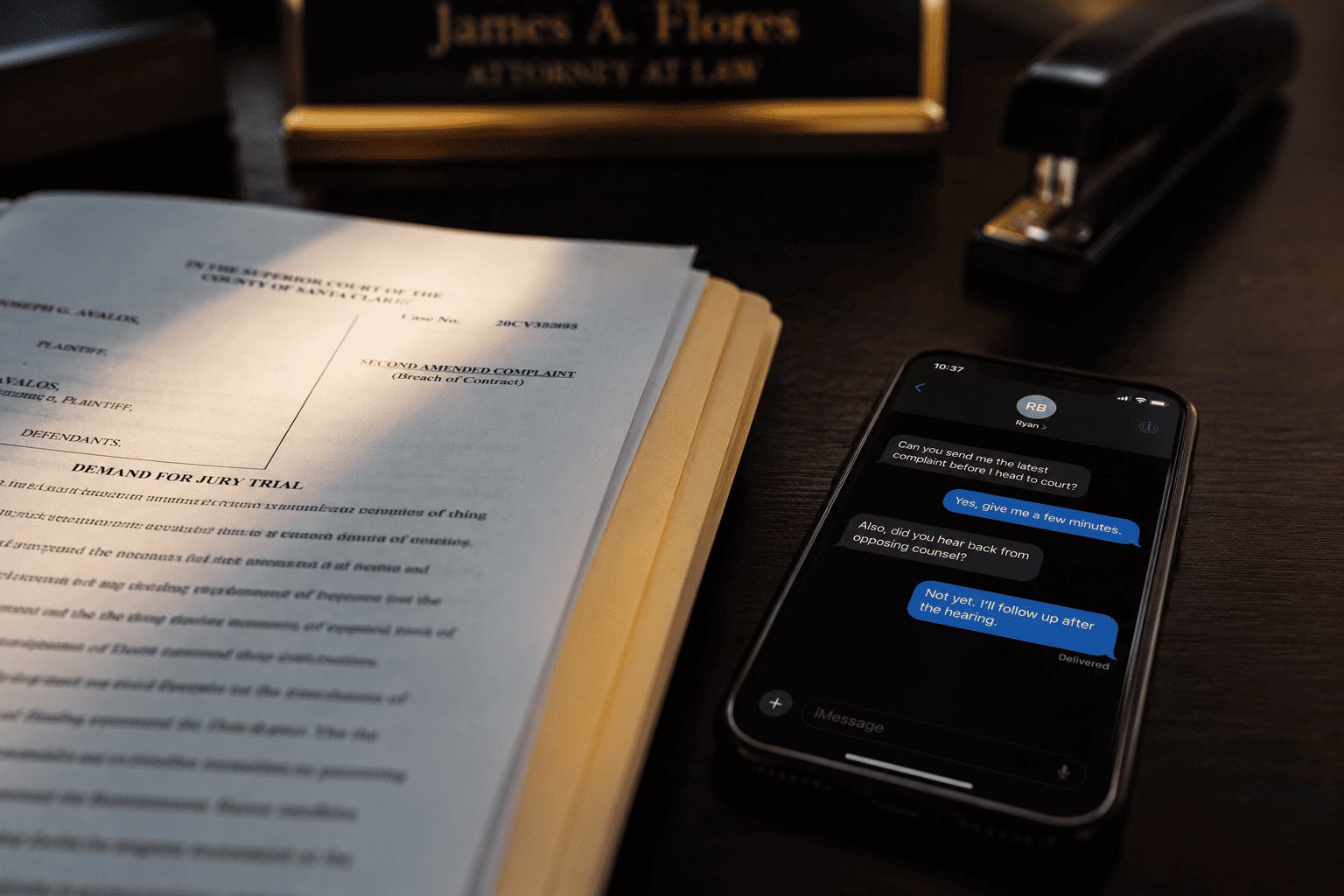
Police can use your text messages against you in a California criminal case when those messages are lawfully obtained and treated as relevant evidence in an investigation. Many people think of text conversations as private and informal, but digital communication can become part of felony, misdemeanor, and DUI cases when law enforcement believes it may help establish a timeline, intent, relationships, or conflicting statements.
That makes it important to understand that text messages are not isolated from the rest of a case. They may be reviewed alongside phone data, social media activity, witness statements, and other digital evidence.
How Digital Evidence Enters a Criminal Investigation
Text messages usually become part of an investigation through a broader evidence-gathering process. The exact method depends on the facts of the case and how law enforcement is trying to build its argument.
Phones may be searched under specific legal procedures
In many cases, access to a phone or its contents depends on legal authority such as consent, a warrant, or another recognized basis for review. The details matter because how the evidence was obtained can affect how it is challenged.
Messages may be examined with other digital activity
Investigators do not always look only at texts. They may also review call logs, photos, app data, location information, or social media content when they believe those records help support the case theory.
Why Text Messages Can Be Powerful Evidence
Text messages can seem casual, but they may carry meaning that prosecutors or investigators believe supports an allegation. Even brief exchanges can be interpreted in ways that affect how a case is framed.
Messages can be used to suggest intent or knowledge
A text may be used to argue that a person planned something, understood a situation, or reacted in a way that supports the prosecution’s position. Context often becomes critical because a short message may look different when separated from the full conversation.
Digital records can affect credibility disputes
If a person’s statement conflicts with a message history, investigators may try to use those communications to challenge credibility. That can be especially important in cases where the facts are disputed.
Practical Concerns in Felony, Misdemeanor, and DUI Cases
The role of text messages can vary depending on the type of allegation. In some cases, they may be used to place people together, suggest impairment-related decisions, or support a sequence of events that prosecutors want to highlight.
The broader context still matters
Not every message means what law enforcement claims it means. Timing, tone, missing exchanges, and related digital records can all affect interpretation.
Early legal review can be important
When digital evidence is involved, it may be necessary to review how the phone was accessed, what records were collected, and how those records are being used in the case.
Text Messages Should Never Be Treated as Minor Evidence
Police can use your text messages against you in a California criminal case when those messages become part of the investigation and are used to support the prosecution’s narrative. Because digital evidence can shape how a case is understood, it is important to take text-message issues seriously from the start.
Need Legal Assistance in Southern California? Basseliz Law Group is Here To Help
Whether it’s family law, criminal law, or immigration, at Basseliz Law Group, we have made it our mission to help you navigate the legal process with confidence. From our offices in Riverside, California, we serve clients from all over Southern California, including Moreno Valley, Menifee, Murrieta, Pomona, San Bernardino and Riverside County. Contact us today at 951-389-0021 or send an email frontdesk@basselizlaw.com