Understanding evidence and proof in a criminal case helps explain why an accusation does not automatically establish guilt. Evidence is the information presented for consideration. Proof is the persuasive result the prosecution must establish from admissible evidence under the required legal standard.
A case may contain many pieces of information without every item being reliable, relevant, or sufficient. Careful review is essential before conclusions are reached.
What Counts as Evidence
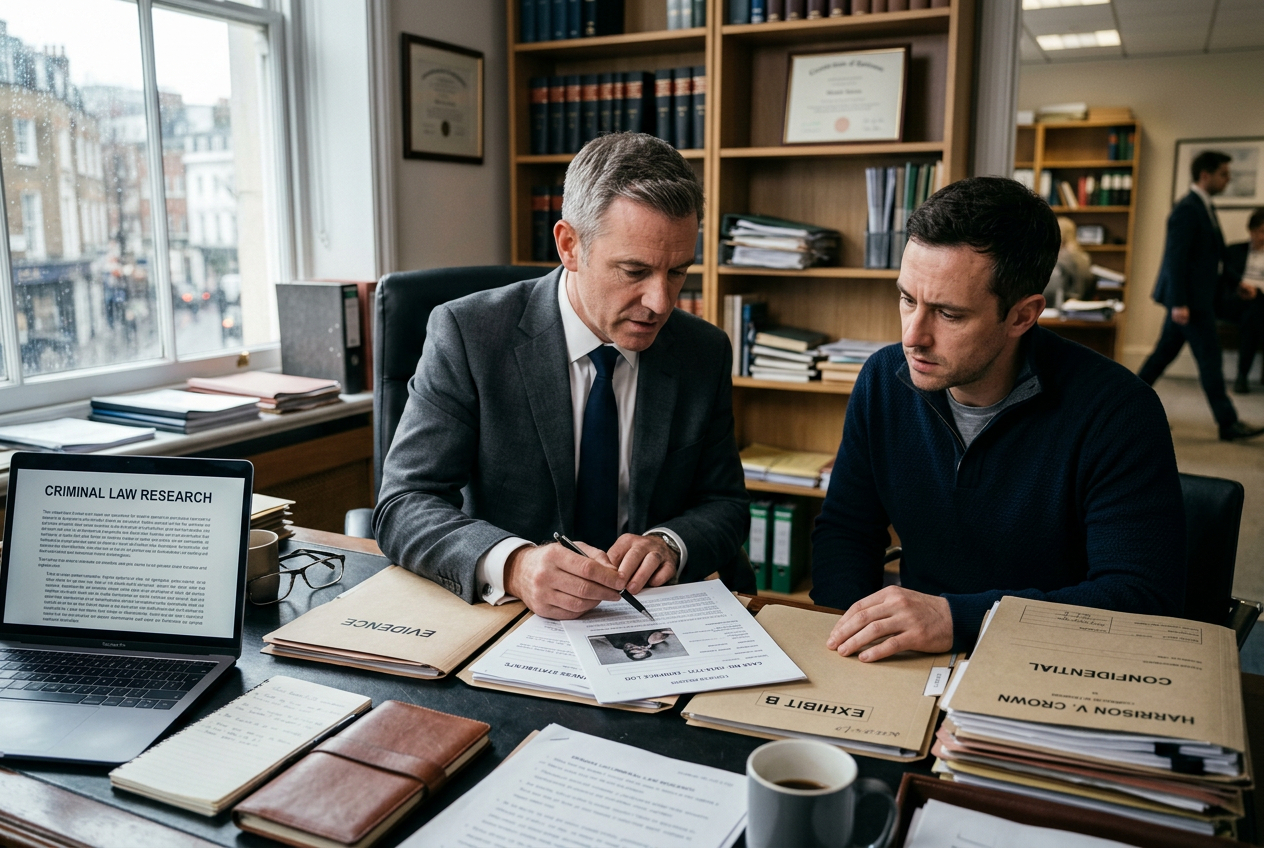
Evidence can take different forms, including testimony, documents, physical items, recordings, or digital information. Each item may tell part of a story, but its meaning depends on context and how it connects to the issues in the case.
The existence of evidence does not settle whether it is accurate. A statement may be inconsistent, a record may be incomplete, or an item may support more than one reasonable interpretation.
What Prosecutors Must Prove
The prosecution carries the responsibility to prove the criminal charge. That requires more than presenting an allegation or pointing to suspicion. The evidence must establish the elements of the charged offense under the applicable standard.
This distinction protects against treating an arrest, accusation, or individual piece of evidence as an automatic conclusion. The whole case must be evaluated, including what the evidence does and does not show.
Why Evidence Must Be Examined
Careful examination asks where evidence came from, how it was collected, whether it is consistent, and whether important context is missing. It also considers whether different pieces genuinely reinforce one another or merely repeat the same unverified claim.
The defense may challenge reliability, relevance, interpretation, or the way evidence was obtained. The appropriate questions depend on the facts, which is why a case should be assessed individually rather than through assumptions.
Avoiding Premature Conclusions
People sometimes hear that prosecutors have evidence and assume the outcome is already decided. That overlooks the difference between possessing information and proving every required part of a charge.
Anyone accused of a crime should preserve documents, follow court instructions, and avoid public discussions that could complicate the matter. Legal guidance can help identify which evidence deserves closer review and what it means in the context of the case.
A Careful Review Matters
Evidence is the material used to support or challenge a claim; proof is what that material must establish. Keeping the distinction clear reinforces a basic principle: accusations must be tested, and evidence should be examined before a judgment is made.
Need Legal Assistance in Southern California? Basseliz Law Group is Here To Help
Whether it’s family law, criminal law, or immigration, at Basseliz Law Group, we have made it our mission to help you navigate the legal process with confidence.
From our offices in Riverside, California, we serve clients from all over Southern California, including Moreno Valley, Menifee, Murrieta, Pomona, San Bernardino and Riverside County. Contact us today at 951-389-0021 or send an email frontdesk@basselizlaw.com